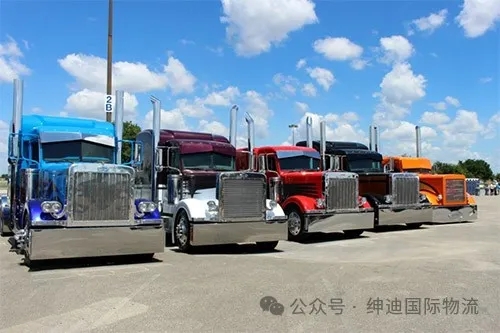
American Haika is a shipping based FBA first-leg logistics method, which is characterized by the use of sea transportation for the first leg and truck delivery to the Amazon warehouse in the United States for the last leg. Haika's advantage is affordable, suitable for large quantities, large volume, time requirements are not too high products. Haika's process and shipping costs are as follows:
First, the process of the United States Haika
1. The seller will pack the goods, label them with FBA, systematically order and print the delivery note, and ask the goods to be delivered to the logistics company.
2. The logistics company will load the goods, declare, transport to the port, load the container and ship.
3. After 10-15 days of sea transportation, the goods will arrive at the western port of the United States for customs clearance, container pickup, container dismantling, plate punching and other operations.
4. The logistics company will arrange trucks to deliver the goods to the designated FBA warehouse and provide POD (receipt).
5. The seller tracks the warehousing status of the goods in the Amazon background to complete the initial logistics.
2. Shipping charges of American Sea card
1. There are generally two ways to calculate the freight of Haika, one is charged by volume (CBM), and the other is charged by weight (KG). Different logistics companies and channels may have different quotes and rules, so sellers need to consult and compare in advance.
2. Hikars charged by volume (tax hikars) generally have a starting capacity requirement, such as 1 CBM or 2 CBM. If the volume of the goods is less than the starting volume, the freight shall be calculated according to the starting volume. The Haika charged by volume generally does not include taxes, and the seller needs to bear the taxes and other fees at the port of destination, such as inspection fees and overtime fees.
3. The sea card charged by weight (including tax) is generally double clear tax, that is to say, the freight has included the destination port of taxes and other fees, the seller does not need to pay additional. Haika, which charges by weight, generally does not have the requirement of lifting volume, as long as it meets the minimum weight of the charge, such as 50KG or 100KG. If the weight of the goods is less than the weight of the minimum charge, the freight shall be calculated according to the weight of the minimum charge.
4. Generally speaking, the Haika charged by weight is more convenient and simpler than the Haika charged by volume, but it also depends on the volume to weight ratio of the specific goods, as well as the quotation and service quality of the logistics company, the seller needs to choose the appropriate Haika method according to their actual situation.
Third, the advantages of American Haika over Shanghai
Shanghai Pai is another FBA first-leg logistics method based on sea transportation, which is characterized by the use of sea transportation for the first leg and express delivery for the last leg to the Amazon warehouse in the United States. The advantage of Shanghai school is fast aging, wide delivery range, suitable for products with high aging requirements.
However, Shanghai Pai also has some disadvantages, such as high price, freight is generally charged by weight (KG), more expensive than Haika. Moreover, the time limit of Shanghai Pai is not very stable, especially in the epidemic and peak season, the delivery of express delivery may be delayed, burst, lost pieces and other problems, resulting in the goods can not be timely warehousing, affecting the seller's sales and evaluation.
In contrast, the price of Haika is low, and the freight is generally charged by volume (CBM) or weight (KG), which is much cheaper than Haipai. Moreover, the timeliness of Haika is also relatively stable, especially in the epidemic and peak season, the delivery of trucks will not be greatly affected, which can ensure that the goods are placed in the warehouse on time and improve the seller's inventory turnover and profit margin.
Therefore, for products with large quantities, large volume and low timeliness requirements, Haika is a better choice, which can save logistics costs, improve logistics efficiency and reduce logistics risks.
Fourth, the United States Haika limitation
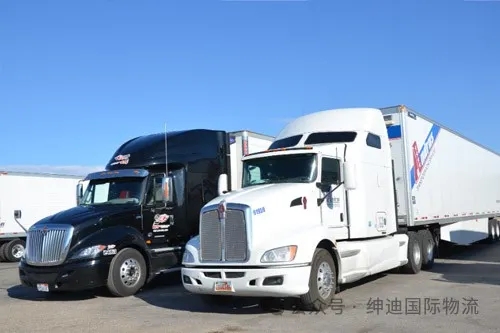
The timeliness of Haika mainly depends on two aspects, one is the shipping time of the first leg, and the other is the truck delivery time of the last leg. The first shipping time is generally 10-15 days, and the last truck delivery time is generally 1-13 days, depending on the location of the FBA warehouse at the destination and the delivery frequency of the logistics company. For example, the card delivery to the United States will take a long time, such as the FBA warehouse, the collection time will be longer. But even card delivery to the US East is much faster than the 45-55 days it takes to fly directly to the US East by sea, especially given the drought in Panama, traffic restrictions and Red Sea events around the Cape of Good Hope.
Generally speaking, the truck delivery time of FBA warehouses in the West of the United States is relatively short, about 1-2 days, the truck delivery time of FBA warehouses in the United States and China is about 4-5 days, and the truck delivery time of FBA warehouses in the east of the United States is about 10-13 days. Therefore, the total time of OA ship Haika is about 17-28 days, depending on the specific shipment date and warehouse. If you choose Meisen, you can increase the time limit by a few more days.
Although the time of Haika is not as fast as Shanghai, it is not too slow, and it is relatively stable, and there will be no big fluctuations because of the problem of express delivery. Sellers can arrange the logistics of Haika in advance according to their product characteristics and sales plans to ensure that the goods can be stored in time to meet the needs of customers.